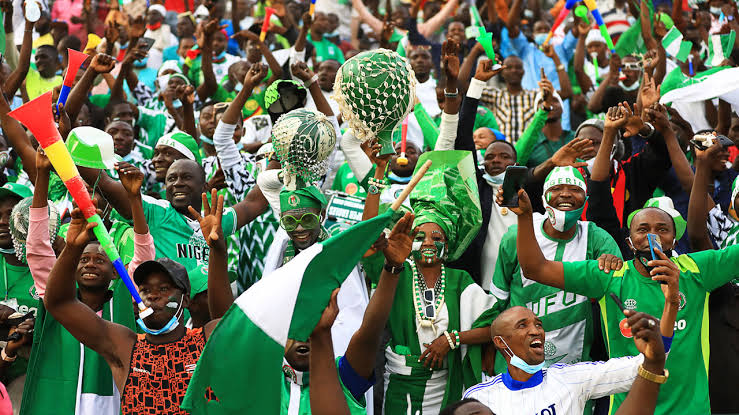
There is something bittersweet about watching a FIFA World Cup as a Nigerian.
The football is beautiful. The stories are inspiring. The stadiums are alive. The drama is unforgettable, but somewhere in the middle of all the excitement comes the painful reminder that the biggest football-loving nation in Africa is once again watching from the sidelines.
We have been reduced to spectators for the second World Cup in a row. And while we want to enjoy the biggest football showpiece on earth, choose who we support, and decide who we hate-watch, there is always that lingering thought that we were failed by the Nigeria Football Federation
How did we get here?
How did we get here is a valid question, but more importantly, who takes responsibility?
Football is not just another sport in Nigeria. It is part of our national identity. It is one of the few things capable of bringing over 200 million people together in joy or heartbreak.
Missing one World Cup is painful enough, but missing consecutive World Cups should trigger serious introspection.
Across football, and indeed across every sphere of public life there is an unwritten principle of leadership: when results are poor, leaders accept responsibility.
Sometimes that responsibility comes in the form of resignation.
Sometimes it comes with a detailed rebuilding programme presented to the media, supporters and the public, but it almost always comes with accountability.
History offers several examples.
Yasser Al-Misehal (Saudi Arabia) was President of the Saudi Arabian Football Federation (SAFF). There have been widespread reports that he resigned after they failed to qualify for the knockout rounds of the 2026 World Cup.
This team qualified for the World Cup, at least.
Carlo Tavecchio (Italy) initially resisted calls to step down in 2017 after Italy failed to qualify for the 2018 World Cup, the first time they would be missing out since 1958. But after immense pressure from the public, the media, and the Italian Olympic Committee (CONI), he resigned a week later.
I wonder why the Nigerian public and media are silent on the NFF board.
Reinhard Grindel (Germany) eventually resigned in 2019 over ethics controversies involving undisclosed benefits and the acceptance of an expensive watch. However, his position had already been significantly weakened by Germany’s disastrous group-stage exit at the 2018 World Cup.
But our people in Nigeria are sitting tight to their positions.
Giancarlo Abete (Italy) announced his resignation at the same post match press conference that Italy coach, Cesare Prandelli stepped down. Italy had failed to qualify from a 2014 World Cup group that had Costa Rica and Uruguay.
The principle is simple.
Leadership should never be separated from accountability.
That brings us home.
The Nigeria Football Federation, led by Ibrahim Musa Gusau, oversaw Nigeria’s failure to qualify for this World Cup. That failure did not happen overnight.
It was the culmination of years of inconsistent planning, questionable decisions, frequent coaching changes, administrative uncertainty and a qualifying campaign that simply was not good enough.
The consequences are enormous.
Millions of dollars in lost revenue; reduced international visibility, and a generation of young supporters deprived of seeing their country compete on football’s biggest stage.
This should never become normal.
But the NFF leadership has chosen to stay
If resignation is not the chosen path, then Nigerians deserve something equally important.
A vision, so what exactly is the plan?
What changes have been made since qualification was lost?
How will youth development improve? How will the domestic league become stronger? How will coaching appointments become more transparent? How will grassroots football receive greater investment? How will talent identification improve? How will relationships with clubs be strengthened?
And perhaps most importantly…
How does Nigeria ensure this never happens again?
Silence cannot be the strategy. Yet that appears to be the path the NFF leadership has chosen, perhaps believing that, like always, Nigerians will eventually move on
Nigerians deserve clarity, because supporters have invested emotionally for decades, while the sponsors invest financially.
The least our football administrators owe everyone is transparency.
Tell us where Nigerian football is heading, and tell us what success will look like in four years. Tell us how progress will be measured.
Tell us why Nigerians should believe, because if you choose not to resign, then you must choose something equally demanding.
You must choose to convince the nation that you remain the right people for the job, because leadership is not defended by staying in office. It is defended by earning public confidence.
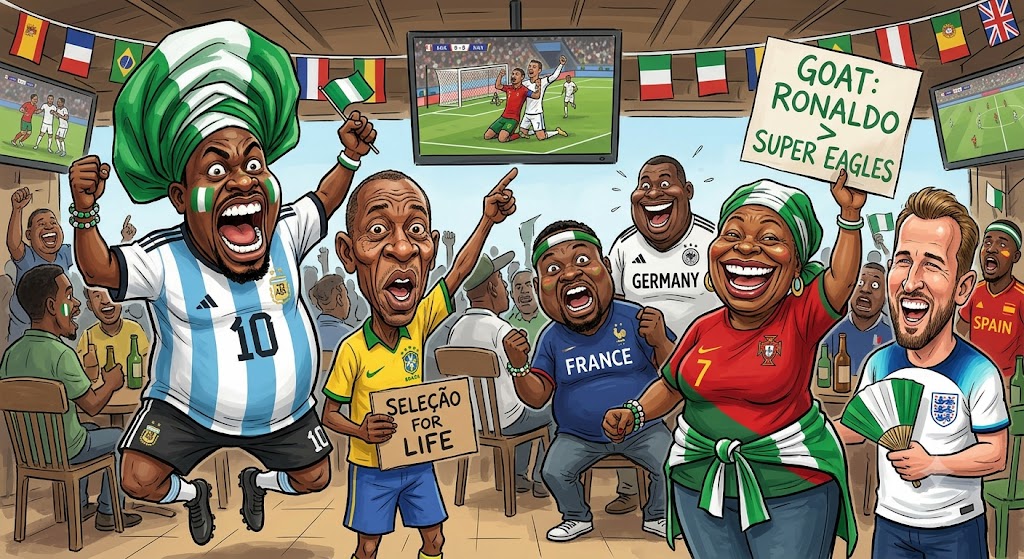
As Nigerians enjoy another World Cup from their living rooms, sports bars and viewing centres, let us also remember that this should never become acceptable.
One thing, however, is beyond debate.
The Nigerian people deserve answers; they deserve accountability, and they deserve a plan.
And after another World Cup watched from the sidelines, they deserve to know that this will never happen again.
My seven minutes are up..